Blog

Diabetic Foot Wounds

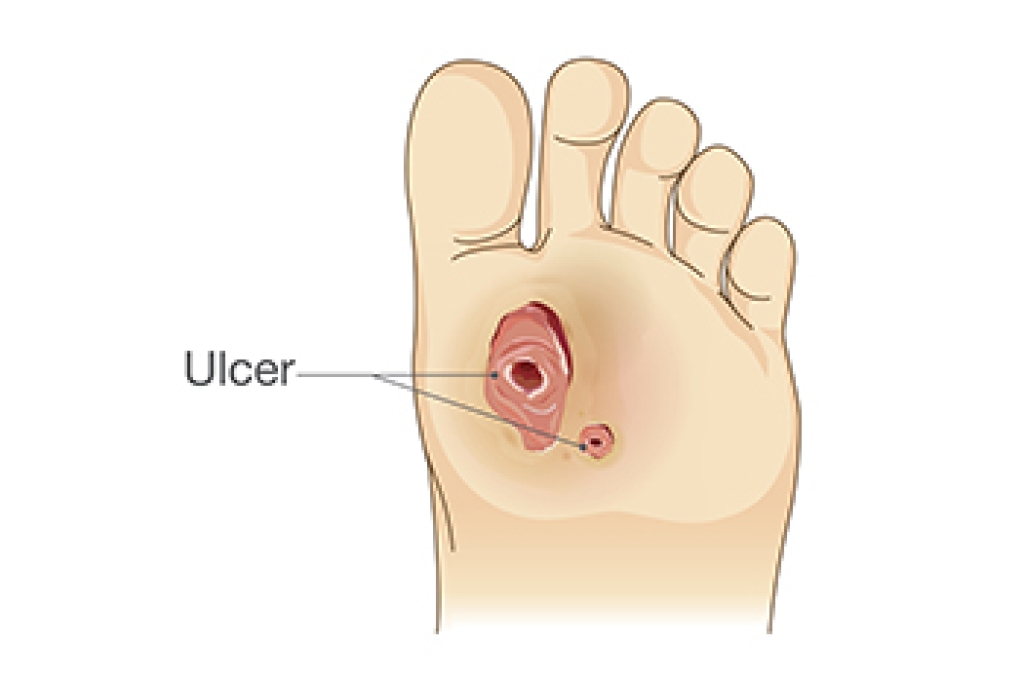
Diabetes affects the body's ability to heal foot wounds due to its impact on metabolizing glucose. High blood sugar levels hinder wound healing by preventing efficient nutrient and oxygen delivery, reducing immune system function, and increasing inflammation. Peripheral neuropathy, common in diabetes, can lead to reduced sensation in the feet, making foot wounds more prevalent. Poor circulation, often linked to diabetes, further impairs healing by reducing blood flow and affecting red blood cell function. Immune system deficiencies in diabetes hinder the body's ability to heal foot wounds and increase the risk of infection. Elevated blood sugar levels also promote bacterial growth, worsening the risk of infection. To aid in foot wound healing, performing regular self-foot checks are crucial in detecting wounds early. Removing dead tissue, keeping dressings fresh, and avoiding pressure on the wound can facilitate healing. If you experience symptoms such as tingling, burning, or persistent pain, or if your foot wound worsens, it is suggested that you make an appointment with a podiatrist as quickly as possible who can help you manage this serious condition.

Wound care is an important part in dealing with diabetes. If you have diabetes and a foot wound or would like more information about wound care for diabetics, consult with Dr. Yeon A. Shim from Roselle Podiatry Group. Our doctor will assess your condition and provide you with quality foot and ankle treatment.

What Is Wound Care?

Wound care is the practice of taking proper care of a wound. This can range from the smallest to the largest of wounds. While everyone can benefit from proper wound care, it is much more important for diabetics. Diabetics often suffer from poor blood circulation which causes wounds to heal much slower than they would in a non-diabetic. 

What Is the Importance of Wound Care?

While it may not seem apparent with small ulcers on the foot, for diabetics, any size ulcer can become infected. Diabetics often also suffer from neuropathy, or nerve loss. This means they might not even feel when they have an ulcer on their foot. If the wound becomes severely infected, amputation may be necessary. Therefore, it is of the upmost importance to properly care for any and all foot wounds.

How to Care for Wounds

The best way to care for foot wounds is to prevent them. For diabetics, this means daily inspections of the feet for any signs of abnormalities or ulcers. It is also recommended to see a podiatrist several times a year for a foot inspection. If you do have an ulcer, run the wound under water to clear dirt from the wound; then apply antibiotic ointment to the wound and cover with a bandage. Bandages should be changed daily and keeping pressure off the wound is smart. It is advised to see a podiatrist, who can keep an eye on it.

If you have any questions please contact our office located in Roselle, NJ . We offer the newest diagnostic and treatment technologies for all your foot and ankle needs.

Read more about Wound Care

Wounds That Don't Heal Need to Be Checked

Your feet are covered most of the day. If you're diabetic, periodic screening is important for good health. Numbness is often a sign of diabetic foot and can mask a sore or wound.

The Complex Anatomy of Your Feet and Ankles

Our feet and ankles are marvels of engineering, combining intricate structures to support our weight and facilitate movement. The remarkable anatomy of the foot consists of 26 bones, comprising the tarsal, metatarsal, and phalangeal bones, forming arches that provide stability and flexibility. Ligaments connect these bones, acting like tough rubber bands to hold the structure together. Meanwhile, muscles and tendons play a crucial role in moving the foot and toes. The ankle joint forms where the lower leg meets the foot, connecting the tibia and fibula to the talus bone. Ligaments here ensure stability, while the Achilles tendon at the back enables powerful movements, such as running and jumping. Understanding the intricate web of bones, ligaments, muscles, and tendons in your feet and ankles can help you appreciate their importance. If you would like additional knowledge about the biomechanics of the feet and ankles, it is suggested that you speak with a podiatrist.

If you have any concerns about your feet, contact Dr. Yeon A. Shim from Roselle Podiatry Group. Our doctor can provide the care you need to keep you pain-free and on your feet.

Biomechanics in Podiatry

Podiatric biomechanics is a particular sector of specialty podiatry with licensed practitioners who are trained to diagnose and treat conditions affecting the foot, ankle and lower leg. Biomechanics deals with the forces that act against the body, causing an interference with the biological structures. It focuses on the movement of the ankle, the foot and the forces that interact with them.

A History of Biomechanics

  • Biomechanics dates back to the BC era in Egypt where evidence of professional foot care has been recorded.
  • In 1974, biomechanics gained a higher profile from the studies of Merton Root, who claimed that by changing or controlling the forces between the ankle and the foot, corrections or conditions could be implemented to gain strength and coordination in the area.

Modern technological improvements are based on past theories and therapeutic processes that provide a better understanding of podiatric concepts for biomechanics. Computers can provide accurate information about the forces and patterns of the feet and lower legs.

Understanding biomechanics of the feet can help improve and eliminate pain, stopping further stress to the foot.

If you have any questions please feel free to contact our office located in Roselle, NJ . We offer the newest diagnostic and treatment technologies for all your foot and ankle needs.

Read more about Biomechanics in Podiatry

How Walking and Running Shoes Differ

Choosing the right footwear helps to maintain foot health and prevent injuries. To make an informed choice, it's essential to understand the differences between walking and running shoes. For walkers, experts recommend lightweight shoes with extra shock absorption in the heel and under the ball of the foot. These features help reduce heel pain and discomfort in the ball of the foot. Some walkers prefer shoes with a rounded or rocker bottom, allowing for a smooth weight shift from heel to toe. Runners, however,  should prioritize overall shock absorption and torsional strength in their shoes to guard against injuries like tendonitis, heel pain, and stress fractures. Ill-fitting or unsupportive shoes can cause or worsen issues such as toe pain, corns, bunions, ingrown toenails, and postural problems. Inappropriate shoes can also contribute to joint pain and stress caused by arthritis. If you have particular foot or ankle issues, it is suggested that you make an appointment with a podiatrist for help in finding the right shoes for your walking or running experience.

For more information about walking shoes versus running shoes, consult with Dr. Yeon A. Shim from Roselle Podiatry Group. Our doctor can measure your feet to determine what your needs are and help you find an appropriate pair of footwear.

Foot Health: The Differences between Walking & Running Shoes

There are great ways to stay in shape: running and walking are two great exercises to a healthy lifestyle. It is important to know that running shoes and walking shoes are not interchangeable. There is a key difference on how the feet hit the ground when someone is running or walking. This is why one should be aware that a shoe is designed differently for each activity.

You may be asking yourself what the real differences are between walking and running shoes and the answers may shock you.

Differences

Walking doesn’t involve as much stress or impact on the feet as running does. However, this doesn’t mean that you should be any less prepared. When you’re walking, you land on your heels and have your foot roll forward. This rolling motion requires additional support to the feet.

Flexibility – Walking shoes are designed to have soft, flexible soles. This allows the walker to push off easily with each step.

If you have any questions, please feel free to contact our office located in Roselle, NJ . We offer the newest diagnostic and treatment technologies for all your foot care needs.

Read more about Differences between Walking and Running Shoes

Symptoms of Charcot-Marie-Tooth Disease

Charcot-Marie-Tooth disease is a cluster of inherited genetic disorders that impact the peripheral nervous system. These neuropathies disrupt the intricate network responsible for movement and sensation within the extremities, including the feet. The peripheral nervous system serves as a communication bridge between the brain, spinal cord, and muscles. Charcot-Marie-Tooth disease results in a range of symptoms that interfere with this process and dramatically influence foot health. Gradual muscle wasting in the feet and legs is a hallmark of this disease, causing increasing weakness and reduced control over time. This frequently leads to difficulties in mobility and balance. It also can result in high foot arches, known as pes cavus, and clawed toes. These structural changes can further impede proper foot function and comfort. An altered gait, often high-stepping, and a slapping sound when walking are only some of the common symptoms. Poor balance and a risk of falling are others, caused by weakened muscles and loss of sensation. Although there is no cure, it is possible to manage foot-related challenges and potentially slow down the progression of the disease. For guidance, it is suggested that you make an appointment with a podiatrist.

When dealing with systemic disease of the feet, it is extremely important to check the affected areas routinely so that any additional problems are caught quickly.  If you have any concerns about your feet and ankles contact Dr. Yeon A. Shim from Roselle Podiatry Group. Our doctor will assist you with all of your podiatric needs.

Systemic Diseases of the Feet

Systemic diseases affect the whole body, and symptoms usually are displayed in the feet. This condition can make a patient’s ability to walk unbearable.  Systemic diseases include gout, diabetes mellitus, neurological disorders, and arthritis.

Gout – is caused by an excess of uric acid in the body. Common symptoms include pain, inflammation, and redness at the metatarsal/phalangeal joint of the base big toe. Gout can be treated by NSAIDs to relieve pain and inflammation, and other drugs that lower the acid levels in the body.

Diabetes mellitus – is an increase in the level of blood sugar that the body cannot counteract with its own insulin. Failure to produce enough insulin is a factor in Diabetes.

Diabetes of the Feet

Diabetic Neuropathy – may lead to damaged nerves and affect the feet through numbness and loss of sensation.

Peripheral Vascular Disease – can restrict the blood flow to the feet, and often times lead to amputation of the feet. 

If you have any questions please contact our office located in Roselle, NJ . We offer the newest diagnostic and treatment technologies for all your foot and ankle needs.

Read more about Systemic Diseases of the Foot
scroll to top