Blog

Wound Debridement

Debridement wound care is often necessary for the proper healing and prevention of complications in foot wounds. Debridement, whether with special dressings, maggots, or mechanical methods, aids in removing dead or infected tissue and facilitates healing. After this procedure, it is important to regularly change the dressing, as per your podiatrist’s instructions. Keeping the dressing dry by avoiding activities like swimming or hot tubs is vital. Always maintain cleanliness by washing your hands before and after touching the wound. Avoid applying pressure and use cushions or crutches, if necessary. While debridement carries potential risks like irritation, bleeding, or infection, its benefits often outweigh these. Pay attention to signs of infection, such as increasing pain, redness, swelling, or fever. If you have foot wounds or have had a debridement procedure and healing is slower than expected or shows signs of infection, it is strongly suggested that you schedule an appointment with a podiatrist for care.

Wound care is an important part in dealing with diabetes. If you have diabetes and a foot wound or would like more information about wound care for diabetics, consult with Dr. Yeon A. Shim from Roselle Podiatry Group. Our doctor will assess your condition and provide you with quality foot and ankle treatment.

What Is Wound Care?

Wound care is the practice of taking proper care of a wound. This can range from the smallest to the largest of wounds. While everyone can benefit from proper wound care, it is much more important for diabetics. Diabetics often suffer from poor blood circulation which causes wounds to heal much slower than they would in a non-diabetic. 

What Is the Importance of Wound Care?

While it may not seem apparent with small ulcers on the foot, for diabetics, any size ulcer can become infected. Diabetics often also suffer from neuropathy, or nerve loss. This means they might not even feel when they have an ulcer on their foot. If the wound becomes severely infected, amputation may be necessary. Therefore, it is of the upmost importance to properly care for any and all foot wounds.

How to Care for Wounds

The best way to care for foot wounds is to prevent them. For diabetics, this means daily inspections of the feet for any signs of abnormalities or ulcers. It is also recommended to see a podiatrist several times a year for a foot inspection. If you do have an ulcer, run the wound under water to clear dirt from the wound; then apply antibiotic ointment to the wound and cover with a bandage. Bandages should be changed daily and keeping pressure off the wound is smart. It is advised to see a podiatrist, who can keep an eye on it.

If you have any questions please contact our office located in Roselle, NJ . We offer the newest diagnostic and treatment technologies for all your foot and ankle needs.

Read more about Wound Care

Plantar Warts Can Be Treated!

Plantar warts are small growths that develop on parts of the feet that bear weight. They're typically found on the bottom of the foot. Don't live with plantar warts, and call us today!

Causes of Blackened Toenails

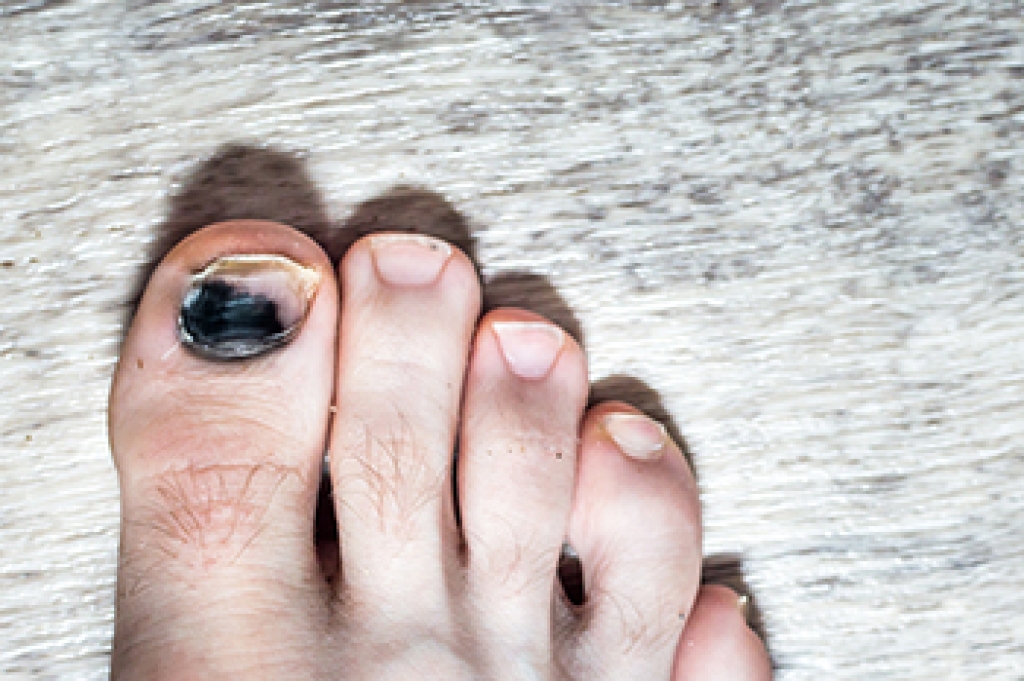
Blackened toenails are caused by repetitive pressure and friction, often occurring when the toe is forced against the front edge of a shoe's toe box. While sometimes referred to as tennis toe, blackened toenails can also affect athletes in soccer, football, squash, racquetball, basketball, running, and skiing. Symptoms include throbbing pain and a reddish-blue or black discoloration of the nail plate due to a subungual hematoma, which is caused by blood under the nail. The big toe is more commonly affected in blackened toenails, but the second toe may also be affected. Wearing ill-fitting shoes plays a pivotal role, causing friction that leads to bleeding under the toenail. In severe cases with significant bleeding, swelling, or infection, visiting a podiatrist is suggested. This foot doctor may relieve pressure on the subungual hematoma by making a small hole in the nail or, in extreme cases, recommend partial or complete nail removal. Prevention involves wearing well-fitted shoes and recognizing early symptoms. Whether you are an avid athlete or enjoy an active lifestyle, if you notice discoloration in the toenails, it is suggested that you schedule an appointment with a podiatrist for treatment solutions.

Toe pain can disrupt your daily activities. If you have any concerns, contact Dr. Yeon A. Shim of Roselle Podiatry Group. Our doctor can provide the care you need to keep you pain-free and on your feet.

What Causes Toe Pain?

Most severe toe pain is caused due to a sports injury, trauma from dropping something heavy on the toe, or bumping into something rigid. Other problems can develop over time for various reasons.

Toe pain can be caused by one or more ailments. The most common include:

  • Trauma
  • Sports injury
  • Wearing shoes that are too tight
  • Arthritis
  • Gout
  • Corns and calluses
  • Hammertoe
  • Bunions
  • Blisters
  • Ingrown toenails
  • Sprains
  • Fractures (broken bones)
  • Dislocations

When to See a Podiatrist

  • Severe pain
  • Persistent pain that lasts more than a week
  • Signs of infection
  • Continued swelling
  • Pain that prevents walking

Diagnosis

In many cases the cause of toe pain is obvious, but in others, a podiatrist may want to use more advanced methods to determine the problem. These can range from simple visual inspections and sensation tests to X-rays and MRI scans. Prior medical history, family medical history, and any recent physical traumatic events will all be taken into consideration for a proper diagnosis.

Treatment

Treatments for toe pain and injuries vary and may include shoe inserts, padding, taping, medicines, injections, and in some cases, surgery. If you believe that you have broken a toe, please see a podiatrist as soon as possible.

If you have any questions please contact our office located in Roselle, NJ . We offer the newest diagnostic and treatment technologies for all your foot and ankle needs.
Read more about Toe Pain

Lump on the Bottom of the Foot

A lump on the bottom of your foot can lead to discomfort and hinder your daily activities. Among the most common causes of bumps or lumps under the foot are plantar fibromas. These bumps are firm and rubbery nodules that form under the arch. While often painless, plantar fibromas can feel like a stone in the shoe while walking. Calluses, resulting from thickened skin, typically around toes and the ball of the foot, are usually painless and are manageable with proper footwear, creams, and orthotics. Bone spurs, caused by abnormal bone growth due to friction or stress can form hard lumps under the foot. They can be painful, especially during walking, and may require exercises, orthotics, medications, or surgery. Plantar warts, caused by the human papillomavirus, or HPV, result in painful, skin-colored bumps. They respond slowly to treatments like salicylic acid, cryotherapy, or surgery. Additional causes of bumps under the foot include cysts, sesamoiditis, gout, and plantar fasciitis, each requiring specific diagnostic approaches and treatments. If you encounter persistent discomfort or notice a new lump on the bottom of your foot, it is suggested that you schedule an appointment with a podiatrist for an exam and a diagnosis. Treatment options will follow.

Foot Pain

Foot pain can be extremely painful and debilitating. If you have a foot pain, consult with Dr. Yeon A. Shim from Roselle Podiatry Group. Our doctor will assess your condition and provide you with quality foot and ankle treatment.

Causes

Foot pain is a very broad condition that could be caused by one or more ailments. The most common include:

  • Bunions
  • Hammertoes
  • Plantar Fasciitis
  • Bone Spurs
  • Corns
  • Tarsal Tunnel Syndrome
  • Ingrown Toenails
  • Arthritis (such as Gout, Rheumatoid, and Osteoarthritis)
  • Flat Feet
  • Injury (from stress fractures, broken toe, foot, ankle, Achilles tendon ruptures, and sprains)
  • And more

Diagnosis

To figure out the cause of foot pain, podiatrists utilize several different methods. This can range from simple visual inspections and sensation tests to X-rays and MRI scans. Prior medical history, family medical history, and any recent physical traumatic events will all be taken into consideration for a proper diagnosis.

Treatment

Treatment depends upon the cause of the foot pain. Whether it is resting, staying off the foot, or having surgery; podiatrists have a number of treatment options available for foot pain.

If you have any questions, please feel free to contact our office located in Roselle, NJ . We offer the newest diagnostic and treatment technologies for all your foot care needs.

Read more about Foot Pain

Definition and Causes of Sever’s Disease

Sever's disease, clinically known as calcaneal apophysitis, is a common heel condition affecting children and adolescents during periods of rapid growth. This condition specifically targets the growth plate in the heel bone, known as the calcaneal apophysis. It occurs when the Achilles tendon exerts excessive tension on the growth plate, leading to inflammation and discomfort. Sever's disease is prevalent among active youngsters involved in sports that entail running and jumping. The bones and tendons in the feet are still developing during this stage, making them more susceptible to stress and irritation. Other contributing factors include inadequate footwear, overuse, and biomechanical issues such as flat feet. Recognizing the signs, which may include heel pain and limping, is essential for early intervention. If your active child has heel pain, it is suggested that you consult a podiatrist who can accurately diagnose and treat Sever’s disease.

Sever's disease often occurs in children and teens. If your child is experiencing foot or ankle pain, see Dr. Yeon A. Shim from Roselle Podiatry Group. Our doctor can treat your child’s foot and ankle needs.

Sever’s Disease

Sever’s disease is also known as calcaneal apophysitis, which is a medical condition that causes heel pain I none or both feet. The disease is known to affect children between the ages of 8 and 14.

Sever’s disease occurs when part of the child’s heel known as the growth plate (calcaneal epiphysis) is attached to the Achilles tendon. This area can suffer injury when the muscles and tendons of the growing foot do not keep pace with bone growth. Therefore, the constant pain which one experiences at the back of the heel will make the child unable to put any weight on the heel. The child is then forced to walk on their toes.

Symptoms

Acute pain – Pain associated with Sever’s disease is usually felt in the heel when the child engages in physical activity such as walking, jumping and or running.

Highly active – Children who are very active are among the most susceptible in experiencing Sever’s disease, because of the stress and tension placed on their feet.

If you have any questions, please feel free to contact our office located in Roselle, NJ . We offer the newest diagnostic and treatment technologies for all your foot care needs.

Read more about Sever's Disease
scroll to top